Mental Health Week 2022

Media Release
Thursday 6 October 2022
As alarming figures show close to 7 in 10 of ALL GP presentations are now people with a mental health issue and 75% of people with severe or complex mental illness are – in essence – getting no support, the Mental Illness Fellowship of Australia says governments simply cannot afford to ignore these big issues.
CEO Tony Stevenson says it is deeply concerning that a huge 54% of all Australians impacted by mental illness do not access any kind of treatment at all and an enormous 3.8 million Australians now live with mental illness – enough people to basically fill a city the size of Hobart 17.5 times.
Tony Stevenson says ignoring the issues will be extremely costly in the long run and will mean taxpayers end up funding bigger and bigger acute mental health service costs, costs associated with prisons, lost productivity and more.
The CEO of the Mental Illness Fellowship of Australia (MIFA) says he is deeply concerned about what is currently happening with the growing issue of mental health in Australia. Tony Stevenson says the current statistics are clear cause for massive concern.
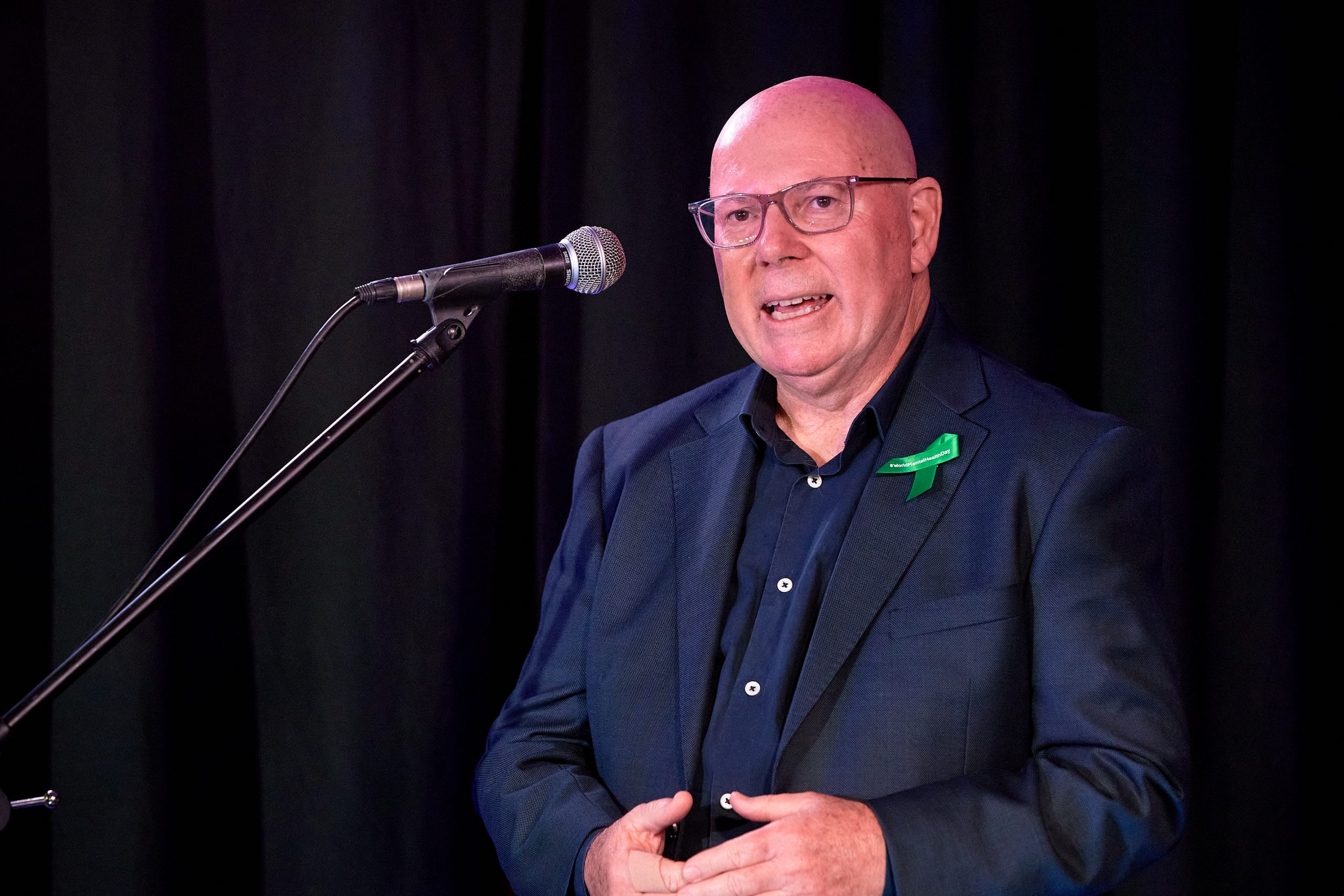
Tony Stevenson says it is critical that all governments are clearly held to account for the huge inadequacy of our current mental health system. MIFA says it is estimated that 3.8 million Australians now live with a mental illness.
Tony Stevenson said, “Governments simply cannot afford to ignore these big issues because otherwise taxpayers will be funding bigger and bigger costs of acute mental health services, homelessness, prisons and lost productivity.”
As part of its latest awareness initiative MIFA highlights:
- A huge 54% of Australians impacted by mental illness do not access any kind of treatment at all.
- Close to 7 in 10 of ALL GP presentations are now people with a mental health issue … MIFA says this is extraordinary.
- 75% of people with severe and complex mental illness are – in essence – getting no support to help them.
- The most common illness of 12-month mental disorders was anxiety – impacting 3.3 million people. (16.8%).
- There is still a huge gap for people with a severe mental illness.
- 8.6 million Australians (aged 16 to 85) have had a mental disorder at some time in their life (43.7%).
- 4.2 million people had a 12-month mental disorder. (21.4%).
Nearly half of ALL Australians will experience a mental health issue in their lifetime.
An enormous 3.8 million Australians live with mental illness…enough people to fill a city the size of Hobart 17.5 times.
The Mental Illness Fellowship of Australia says it is alarming that people with severe mental illness are now four times more likely to die from respiratory disease, two to four times more likely to die from infectious diseases and three to four times more likely to die prematurely than other people in the population.
MIFA says COVID has clearly led to an escalation in fear and anxiety in people with mental health issues. At least 230,000 people across Australia are now affected by schizophrenia … when you add in carers the real number is over a million.
MIFA CEO Tony Stevenson said, “Make no mistake, we desperately need much more support out in the community for people dealing with severe mental illness – they are unquestionably most at risk of poverty, social isolation, poor physical health, reduced life expectancy and suicide.”
“What deeply troubles me is there are at least 150,000 people impacted by severe mental illness in Australia who are totally missing out on community based mental health support (called psycho-social support). Obviously, we are talking about a massive number of deeply neglected Australians. Whilst some improvements have been made over the years, there is such a long, long way to go.”
“As part of our awareness campaign, we are trying to get the message across that if people with a severe mental illness cannot get the support they actually need in their own community, their situation is highly likely to escalate to the point that their only option is to go to an emergency department. We have to start preventing this because hospitals are obviously the costliest way of governments treating people who have a severe mental illness.”
“We simply have to be investing much more in services that help people with mental health issues. We desperately need to make it easier for people to access the actual help that is out there. It has become clear to us that people with mental health issues have found it difficult by the lack of face-to-face support. This issue needs working on.”
Tony Stevenson says reform around mental health has been very slow. He says a range of people are ending up relying on more expensive hospital admissions and these people are ultimately at a higher risk of homelessness and prison.
Tony Stevenson added, “We are part of an international campaign this year … which is zeroed in on making mental health and well-being a global priority for everybody. The campaign highlights that without determined action, the mental health impact of COVID-19 may actually last far longer than the pandemic itself. The pandemic has shown us no nation was in any way prepared for the actual effects of long COVID and the associated mental health crisis.”
MIFA says mental health in Australia is currently very fragmented and says whilst the NDIS has brought positive change to some people’s lives, there is always room for clear improvement.
MIFA highlights we need to address the attitudes and beliefs that sadly exclude people with mental illness from workplaces, communities and social circles.
As part of its new awareness campaign the Mental Illness Fellowship of Australia:
- Wants people to realise people with severe mental illness can live well in the community and do recover if the right clinical and community support is there.
- Appreciate the social and health benefits for people with severe mental illness when the right support is available.
- Appreciate the clear benefits to the community and the economy when people with severe mental illness are supported in the actual community and kept out of costly acute mental health care facilities.
Tony Stevenson said, “There are so many ways people can practically help a person who has mental health issues. People need to look past the stigma and accept the person in the same way they would for someone with a more ‘socially acceptable’ illness. We urge people to open up conversations about mental illness in their families, communities and workplaces.”
Tony Stevenson highlights help is available for people in all States and Territories and the Mental Illness Fellowship of Australia has set up a very user-friendly on-line initiative which is getting bigger by the day – www.findingnorthnetwork.com.au
Tony Stevenson highlights people can call the MIFA free support line on 1800 985 944 and MIFA will aim to connect callers to the right place in their community.
Media enquiries to: Media Key on 0409 420 112 or 03 9769 6488